Thursday, 9 February 2012

St Edmundsbury Cathedral, Bury St Edmunds

Eastern face of St Edmundsbury Cathedral

Throughout our exploration of The Ruins of the Abbey of St Edmund, we could see St Edmundsbury Cathedral in the near distance.  Like the houses I showed you at the end of the post on the ruins, the cathedral stands right alongside them.  An important destination for pilgrims from the 11th to the 16th century, all that remains of the Abbey at Bury St Edmunds, the wealthiest and most powerful Benedictine monastery in England, is St Edmundsbury Cathedral, St Mary’s Church and the Abbey Gate and Norman Tower.

St Edmundsbury Cathedral

The story of St Edmundsbury Cathedral is really fascinating.  The part of the cathedral that most captured my imagination, both inside and out was the Millennium Tower but as you can judge from the name, it is the most recent addition to the cathedral, completed only in 2005.  In truth, the construction of the church was never completed and it remained incomplete for 450 years.

St Edmundsbury Cathedral 2

When St James's Church was merely a parish church located in the complex of the majestic Abbey of St Edmund, it was deemed unnecessary to add another tower.  The Victorians began restoring cathedrals but never cast their eye on this parish church.  When St James's Church became the Cathedral Church of the Anglican Diocese of St Edmundsbury and Ipswich in 1914, it became clear that the cathedral would need to be completely restored.

St Edmundsbury Cathedral 3

The upheaval and financial strain of the First and Second World Wars meant that work only began in earnest in 1959.  Stephen Dykes Bower had been appointed architect in 1943 and when he died in 1994, he left £2 million to a Trust for the completion of the cathedral.  They also received another boost in 1997 when the Millennium Commission granted £5.15 million.  It seems that the cathedral would finally be completed after 450 years and construction of the tower began in 2001.

Tower at St Edmundsbury Cathedral

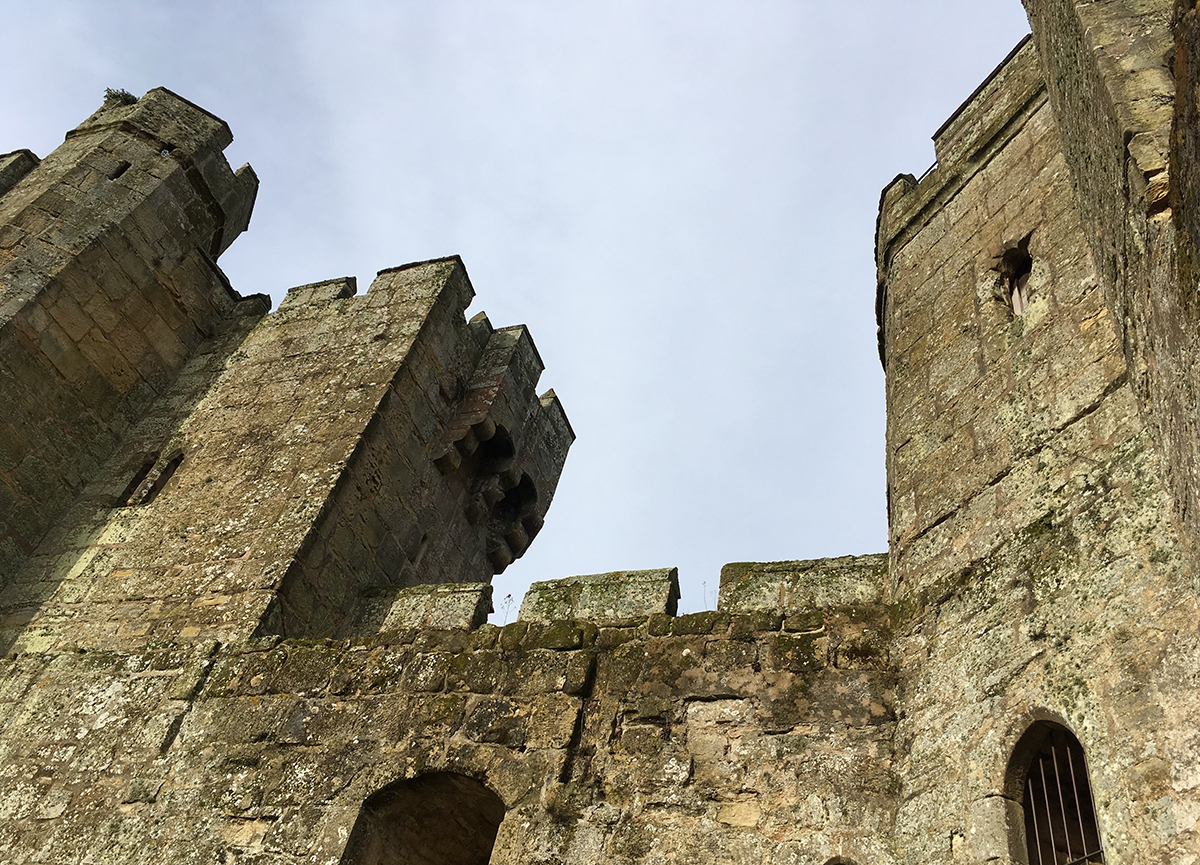
I stood looking at the tower for a very, very long time.  A local couple could obviously see my interest in it because they came over to me to chat.  They must have read my wondering mind because they confirmed that the  weather veins are solid gold.  They also pointed out that you can see the letter E (for St Edmund) on the face of the tower, just below the battlements.  It is in gothic uncial script, which was popular in medieval England, and is endowed with a crown.

I really love that they remained so faithful to the medieval gothic style when building the tower.  In fact, they clad the outside of the tower with the distinctive stone from Barnack and Clipsham to ensure that it blended in with the rest of the building.

South West Tower of St Edmunds Abbey

In the background of the photo above, you can see the post-medieval houses that were built into the remains of the south west tower and walls of St Edmunds Abbey.  I find that quite mercenary and opportunistic, even for the English whose history can be quite gruesome and horrible at times!

Monument to the Protestant Martyrs

Just before we went inside the cathedral, we noticed the Martyr’s Monument.  You will find these memorials located around England to remember the protestant martyrs who were killed during the reign of Queen Mary I for their protestant beliefs.  Mary I wanted to return England to Roman Catholicism and her gruesome campaign earned her the name of Bloody Mary.

Martyrs Monument Detail

This monument remembers 17 protestant martyrs from Bury St Edmunds who died between 1555 and 1558.  The monument was paid for by public subscriptions and was only erected in 1903.  It seems like many of the martyr’s monuments were erected during Victorian times.  I wonder why it took them so long but also why it seemed important to them at that time, four centuries later?

Read more...

Sunday, 5 February 2012

Snow! At Last!

So, the long anticipated English winter finally arrived this week. On Tuesday, we experienced our first sub-zero temperatures and although we had some stunning blue skies this week, it was really cold!  Despite the cold, I was absolutely, 100% convinced that it was not going to snow.  Call it denial but I honestly thought that the snow wouldn’t fall in my little corner of south east England.

The First Snow

I was wrong.  It began snowing at about 9pm last night and must have snowed through the night because we woke up to a winter wonderland this morning.

Waking up to a world of snow

Actually, that is not strictly true.  I woke up to the sounds of my neighbour shovelling snow from his driveway.  Now I have never heard that in my life before!  The snow isn’t usually bad enough for that in England but I expect that his wife had struggled to leave for work this morning. Anyway, it was weird.  

A Snow Tetraptych

The next thing I heard was Stephen having an earnest conversation with our cat.  “No really, you don’t want to go outside… I told you you didn’t want to go outside!”

Playing in the snow

Later on in the morning my neighbours came out to play on their snowboards.  It was so cute as all I could hear was “Squeal! Giggle, giggle, giggle”.

I have no doubt that the snow is going to be less of a novelty or source of amusement tomorrow when I don my cow-print wellies and walk to the rail station in the snow, but it was pretty cool today.

Read more...

Saturday, 4 February 2012

Glimpses of the British Museum

Lion British Museum

After lunch last Saturday afternoon, Greg, Mela, Jen, Melissa and I went through to the British Museum.  It feels almost criminal to admit this but I think it has been over three years since I last visited the British Museum!!

The British Museum

We entered the museum through the Montague Place entrance and I got to see the beautiful lion sculptures for the first time.  The problem with coming through that entrance is it is not immediately as impressive as the main entrance.  Suffice to say, we quickly made our way through to the Great Court to see the exquisite glass ceiling.

Ceiling in British Museum

Room 40: Medieval Europe

When I suggested to the expats and bloggers that I wanted to visit the British Museum, my main interest was to see their collection on the Byzantine Empire (in part due to its influence on Orthodox Christianity but also compounded by The Borgias!).  I duly dragged everyone along with me to room 40 to see what we could find.  I was a tiny bit disappointed to see such a small collection but I guess that just means I will have to make a pilgrimage to Istanbul one day to see the Hagia Sofia.

The Royal Gold Cup

Byzantine art

Room 70: Roman Empire

Ancient Rome

It is strange to think that five years ago, I knew next to nothing about the Roman Empire and would have waltzed through this room without paying attention. 

Since then, I have visited Ephesus in Turkey, seen glimpses of Hadrian’s Wall in Scotland, visited Anglesey in Wales where the Romans brutally supressed the Druids, and just last week discovered that I have worked on what was was Watling Street for the past four years. It is really interesting to see history come alive through my travels.

Hadrian and Antinous

This is Hadrian and his one true love, Antinous… 

Letter from Hadrian to Ephesus

… and this is a letter from Hadrian to the council of Ephesus endorsing the services of Lucius Erastus, a boat owner.

It seems fitting that under this ancient letter and communication, we gathered around to discuss the various blogging platforms and the superiority of Wordpress over Blogger. 

Room 72: Ancient Cyprus

Ancient Cyprus

This is the upper part of a colossal limestone statue of a bearded man.  It dates back to ancient Cyprus in about 500-480BC.  I just loved his beard detail and marvelled that it had survived intact for 2,500 years!

Rooms 62-63: Egyptian death and afterlife: mummies

Ancient Egypt

The sections on Ancient Egypt are my favourites which usually means that I head straight for them on arrival and only emerge several hours later.  It was good to see some other sections for a change.

We only spent an hour in the museum on this visit.  It was nice to leave without feeling completely exhausted but it did leave me with a desire to return as soon as possible! Perhaps I’ll go after work one Friday evening.


I have booked a place on the Camera Settings Workshop with the London Photo School & Club on the 25th February. This is a great workshop that teaches you about those complicated settings on your camera and I actually attended one back two years ago (see my post: Weekend Snapshots ~ 2: London).

Now that I have a new camera with completely different settings (and being that I did not practice what I learned at the last workshop and therefore forgot it), I have decided to attend again. I'm hoping to get some photos of the ruins of the bombed-out church of St Dunstan-in-the-East so please join me if you're interested in that type of thing! The workshop is £45 and includes tuition, practice and feedback.

Read more...
Related Posts Widget for Blogs by LinkWithin

  © Blogger templates Psi by Ourblogtemplates.com 2008

Back to TOP